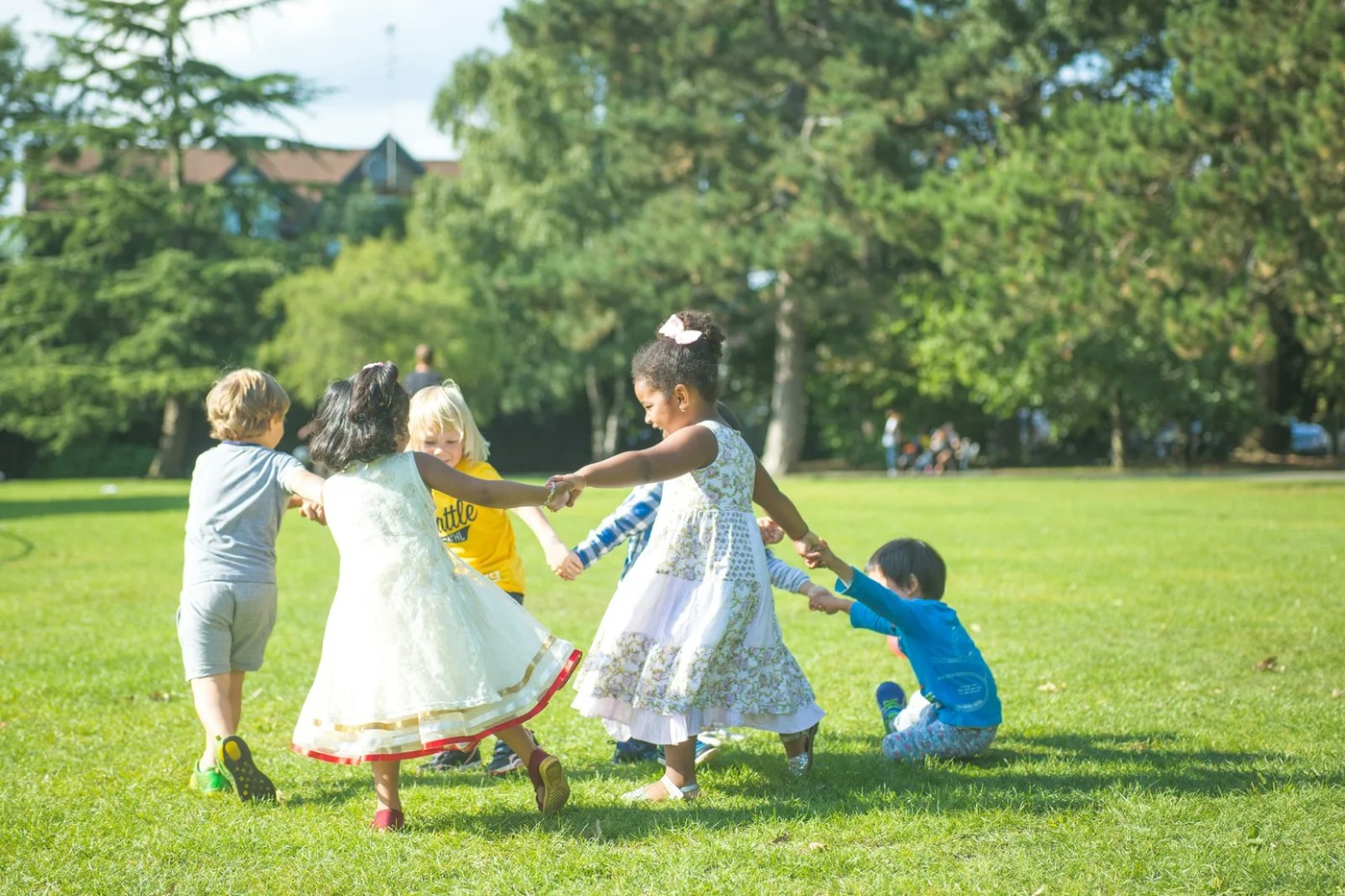
Start with what your child enjoys, and help them meet one or two children who enjoy the same thing. Clubs and other structured activities often work well, and so do short, planned catch-ups with one child. Autistic friendships can look different, such as playing side by side or sharing a favourite topic at length, and they are still real friendships. The aim is connection your child wants, not teaching them to act less autistic.
We say “autistic child” in this guide. Some families prefer other words, and that choice is yours.
What do autistic friendships look like?
They vary. The Raising Children Network says some autistic children are happy with one friend or a small group, and others enjoy larger groups.
Reframing Autism, a charity run by autistic people, describes autistic ways of connecting. They include sharing a favourite topic at length, sometimes called infodumping, and parallel play, which it describes as “being together but not needing to be doing together”. It calls the gap with non-autistic expectations “a cultural mismatch, not a lack of social skills”.
Research gives a similar picture:
- A 2016 analysis of studies of school-age autistic boys noted that most autistic children want friends. The boys did make friends, but had fewer than non-autistic peers and rated their friendships lower in quality.
- In a 2017 Macquarie University study of 77 autistic children, the children and the friends they named both reported fairly high satisfaction with their friendships.
- In a small UK study titled “Sometimes I want to play by myself”, 12 autistic children aged 9 to 11 were generally satisfied with their friendships. Adults’ efforts to help sometimes clashed with what the children wanted.
So ask your child what they want before you plan anything. If they say they are lonely or left out, take it seriously. If they are content with one friend, that counts too.
What is the double empathy problem?
In 2012, autistic researcher Damian Milton described the double empathy problem. Autistic and non-autistic people experience the world and communicate differently, so each can find the other hard to read.
Research gives the idea some support, though much of it involves adults and teenagers, and not every finding has held up:
- First impressions. Across three studies published in 2017, non-autistic people formed less favourable first impressions of autistic people within seconds, and were less willing to spend time with them. This held when 10 to 16 year olds rated boys of a similar age. The difference disappeared when people judged only the words someone had said.
- Who talks to whom. In a small 2021 study of 12 teenagers in a school club, autistic students were more likely to interact with autistic peers, and exchanges between similar peers were more often social and back-and-forth.
- Passing on information. In a 2020 study of adults, autistic groups passed a story along as well as non-autistic groups, while mixed groups lost more detail. A larger repeat in 2025, led by the same researcher and involving 311 people, found mixed groups did just as well.
The details are still being tested, but the research suggests friendship trouble isn’t only a gap in your child’s skills. Other children, adults and the setting are part of it. Raising Children notes that some autistic children find it easier to make friends in small groups, with peers who share their interests, or with other neurodivergent children.
How can I help my child make friends?
These ideas come from Raising Children’s guides to friendships for autistic children and for school-age children:
- Start with interests. Look for children who like what your child likes. The teacher may know which classmates do.
- Choose structured activities. Structured groups often work well, such as chess, Lego or coding clubs, Scouts, Girl Guides, art or music classes and martial arts.
- Keep catch-ups small and planned. Start with one other child and plan what they might do. Put away things your child doesn’t want to share, or meet at a playground. If playdates are tricky, keep them fairly short, for example 1 to 2 hours.
- Offer side-by-side activities. If playing together is stressful, try Lego, painting or playdough next to each other.
- Plan for breaks and rest. Being with friends can be tiring even when it is fun, sometimes because a child is masking to fit in. Have somewhere quiet to go, and allow quiet time afterwards.
- Help others include your child. Give other parents and children ideas. Raising Children’s example is “Bill loves watching people play soccer. He can throw the ball in and be the scorer”.
For young children, our guide to play at home shows how to join your child’s play by following their lead.
Is it OK if my child plays alongside others, or alone?
Yes. Raising Children says it is OK for a child to want to play alone some of the time, and that an autistic child who likes watching others or doing things by themselves isn’t necessarily lonely.
Playing alongside isn’t only a step towards something else. Reframing Autism says many autistic people value parallel play throughout life. Aspect (Autism Spectrum Australia) lists goals that neuro-affirming support should avoid, including putting group and imaginative play ahead of solitary play, and encouraging a child to start play with peers when they would prefer time alone. Australia’s national guideline for supporting autistic children says supports should help children enjoy playful interactions “in ways that they value”.
Do social skills programs work?
Social skills programs teach things like starting conversations, reading body language and solving disagreements, often in a small group. The research shows modest benefits, with limits:
- A 2012 Cochrane review of 5 trials, all in the United States, found some evidence that groups improved social competence and friendship quality. It said more research was needed.
- A 2017 analysis of 19 trials found a modest benefit overall. Young people reported knowing more about social skills, but not using them more, and teachers reported no clear change.
- The national guideline’s evidence summary lists positive effects for one named program, PEERS, drawn from one low-quality review.
- In England, the I-SOCIALISE trial (2023) tested Lego building in small groups with 250 autistic children aged 7 to 15. Teacher-rated social skills improved slightly more than with usual support, but the difference fell just short of statistical significance in the main analysis.
There are also concerns about what some programs teach. Aspect reports a growing discussion, led by autistic people, about programs that teach children to copy non-autistic behaviour, which can add to stigma and masking. The national guideline warns that trying to make a child’s social communication look neurotypical may lead to masking, with significant effects on wellbeing.
If a program is suggested, ask:
- Whose goals is it working on, and did my child help choose them?
- Does it present other ways of communicating as information, or as rules to follow?
- What will the children and adults around my child learn?
- How will we know it is helping my child, and not only changing how they look to others?
Our guide to neuro-affirming OT explains which goals deserve a second look, such as eye contact.
What can the school do?
Support at school isn’t limited to the classroom. In NSW public schools, the learning environment can include the playground, and the adjustments teachers may consider include peer assistance such as buddy systems. Raising Children suggests schools can also set up interest clubs, which give children a structured way to spend lunch, organise group activities at playtime, and pair a child with a peer or support person.
Working with classmates can help too. In a US trial with 60 autistic children in mainstream classrooms, a program delivered through classmates led to more friendship nominations and less time alone in the playground. The gains were still there 3 months later.
Tell the teacher how your child likes to connect, and ask what happens at lunch. Is there a quiet place, a club, and an adult your child can go to? Our guide to school participation covers how to raise adjustments with the school.
What if my child is being bullied?
Autistic students are bullied more often than their non-autistic peers. A 2016 review of 17 studies estimated that 44% of autistic students had been bullied, and a 2020 review of 34 studies put it at 67%. The figures differ because studies measure bullying in different ways.
The NSW Department of Education defines bullying as a misuse of power that is intentional, ongoing and repeated. It can be hard to spot. Raising Children says autistic children may find it hard to describe what happened, or may not realise they are being bullied. Signs include not wanting to go to school, missing or damaged belongings, changes in sleep or eating, stomach aches and mood swings.
If your child is being bullied, the NSW Department of Education suggests:
- Listen, and ask your child what they want you to do.
- Make an appointment with the teacher, and the principal if needed. Contact the school straight away if you are worried about your child’s safety.
- Agree on a plan with the school, keep a record, and contact the school again if the bullying continues.
From 2027, every NSW school must publish anti-bullying policies and procedures that follow the NSW Anti-Bullying Framework.
Bullying is never your child’s fault, and the answer is not for them to hide being autistic. These services can help:
- Kids Helpline: 1800 55 1800. Free, confidential counselling by phone or online for young people aged 5 to 25, 24 hours a day.
- Parent Line NSW: 1300 1300 52. Phone counselling for NSW parents and carers of children aged 0 to 18, 9am to 9pm on weekdays and 4pm to 9pm on weekends.
- eSafety Commissioner. You can report severe online bullying of someone under 18 if the platform doesn’t help.
- Your GP, if your child seems anxious or low, isn’t sleeping or eating as usual, or can’t face school.
If your child talks about hurting themselves or about suicide, get help straight away. Call Lifeline on 13 11 14, 24 hours a day, or 000 if anyone is in immediate danger.
How can an OT help with play and friendships?
Play and leisure are everyday activities, so they are part of an OT’s work. The national guideline lists play and leisure among the activities OTs support, and Raising Children says you can get advice on your child’s social interactions from an OT or a psychologist. An OT may:
- ask your child what they want from friendships, and build goals from that;
- look at where things get hard, such as a noisy lunch area, unstructured time or a game with unclear rules;
- help your child learn a game or activity they want to join;
- plan for noise, crowds and breaks at parties and playgrounds;
- prepare for a new situation with visual supports or a short story;
- practise asking for a break or saying “I don’t like that”;
- work with you and the school on changes to the setting.
Other people do other parts. A speech pathologist works on language and social communication. A psychologist helps with anxiety, low mood, self-esteem and relationships. The school is responsible for adjustments and for responding to bullying. See your GP about health or mental health concerns. OTs don’t diagnose autism.
For noisy or busy places, see helping your child feel comfortable in everyday places. Our guide to social stories shows how to write a story that explains a new situation.
Play and friendship support with VennCare
VennCare’s paediatric occupational therapy is neuro-affirming support for children and families, focused on participation, regulation, routines and practical skills. That can mean helping a child join in play or take part in school routines, with strategies families can use between sessions. Goals are set together with families.
We are a mobile service across South West Sydney. Our OTs see children at home, at school, childcare or preschool, or by telehealth, and for school visits we can help with the paperwork and request entry on your behalf.