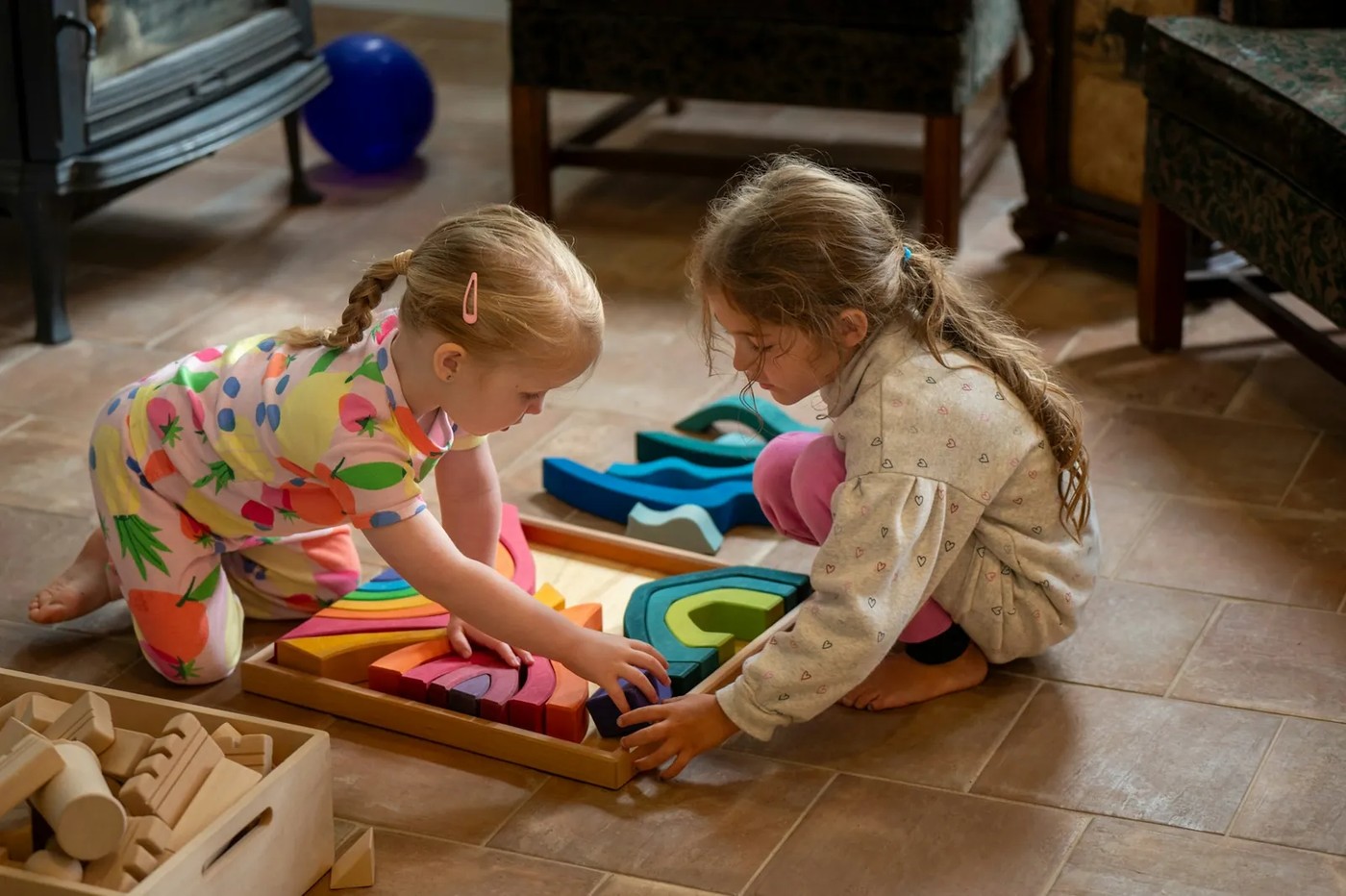
Your child may have an idea for a game before you have chosen an activity. Begin with a moment of watching and an invitation: “Would you like me to join you?” This guide is for families of young children, especially the preschool years.
Notice what has their attention
Watch what your child is doing, then ask whether you can join them. Let them choose what happens next.
NSW early learning guidance encourages families to follow their child’s lead and let them lead the play as much as possible. Children may also prefer to choose which activities they do on a given day.
Ask whether your child would like company, an extra object or space to carry on. Watching together can be an option too.
Offer a small invitation
Imagine your child has made a pretend bus from a box. You might ask if there is a place for your toy passenger, then follow their answer. They may want to organise the passengers, tell a story or move on to another game.
Once you’ve joined in, go along with what your child is doing. You might comment on what you’re both doing, then give them time to respond. Try not to change the way the game works.
Let them decide where the game goes next.
Consider how your child wants to join in
If something is out of reach or difficult to handle, ask which part your child wants help with. For a conversation with an OT, you might describe the position of the materials, the space available and your child’s preferred role.
Play is one of the everyday activities children’s OT services can help with. An occupational therapist may explore your child’s interests, the play activity and the space or objects involved. Talk through any suggested changes with the OT and your child.
Leave room to pause or change the game
Respond when your child wants to pause, leave or choose something else. If they move on to something new, let them lead again. Ask what they would like next, including time without an adult directing the activity.
Rest and play are recognised as children’s rights. The UN Convention on the Rights of the Child includes the right to rest, leisure and play. Australia’s early learning framework describes play as often freely chosen, self-directed and pleasurable.
At health appointments, children should also be listened to and involved in decisions. You can carry that into therapy: “How will this plan leave room for the play my child chooses?”
Ask about the purpose of a suggested activity
If a clinician proposes play as part of therapy, ask what everyday goal it relates to, what evidence supports the particular approach and how you will decide whether to continue. Ask how your child’s interest and willingness will shape the activity.
Before you agree, it’s reasonable to talk through the possible benefits and risks and explain what matters to your family.
Our questions to ask an OT can guide a more detailed discussion.