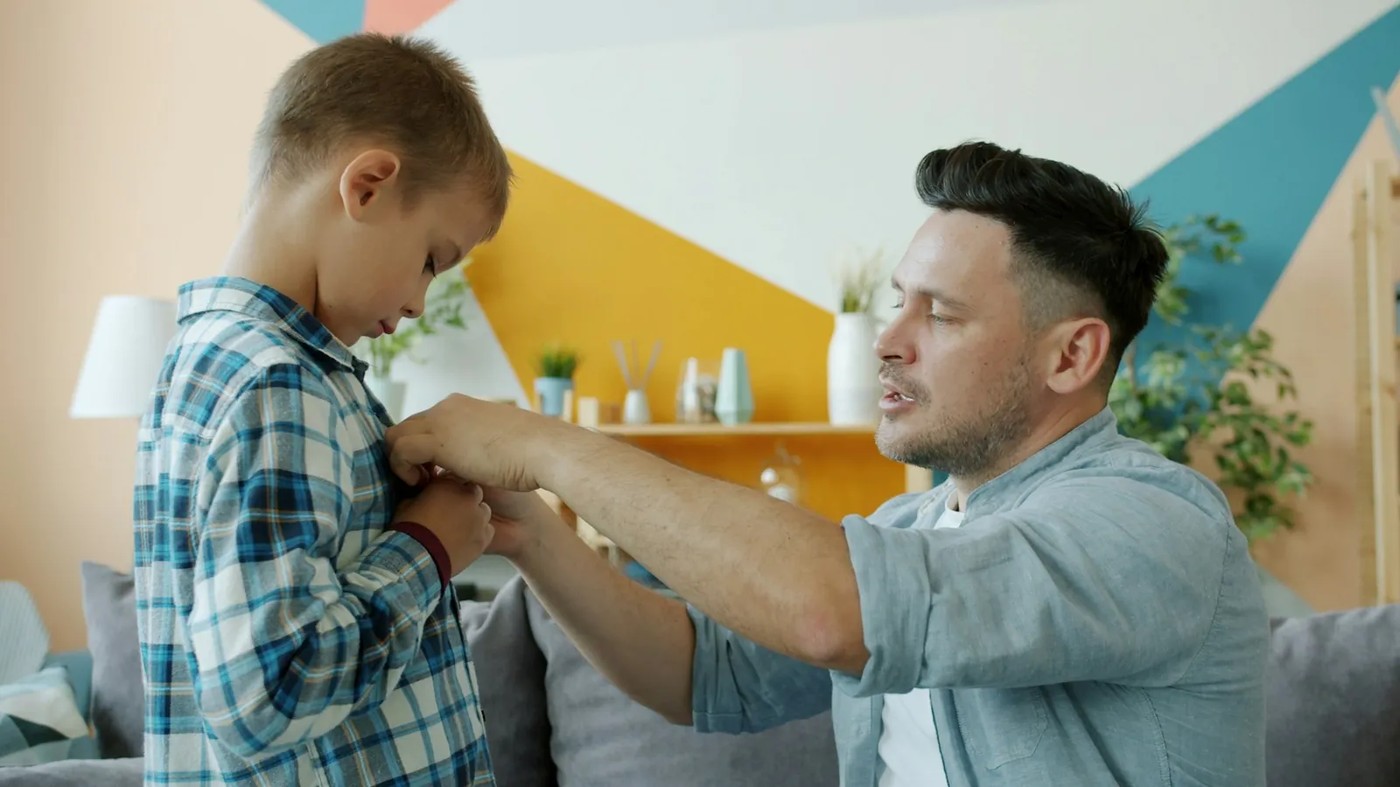
Before heading out, you might be thinking about shoes, the weather and being on time. Your child may be thinking about a favourite top or a fastening they want help with. Start by asking what feels comfortable and what they would like to do today.
Start with the clothing
For preschool, the NSW Department of Education suggests comfortable, practical clothes that are safe and easy for children to manage on their own, including shoes they can play and climb in. It also suggests packing a change of clothes, with socks and underwear.
Which clothes does your child choose? Is a particular collar, cuff or waistband bothering them? Is there one zip that always needs another pair of hands? Ask about the garment before deciding what your child should practise.
Some clothes are easier to manage. You could look at these together:
- loose pants with an elastic waist
- velcro, or large buttons and buttonholes
- a picture on the front, to help tell front from back
- clothes that are comfortable to move in
- velcro or slip-on shoes.
A favourite top might still be the one your child wants to wear, even if it is tricky. That can be part of the conversation about where help is welcome.
Agree on a part to share
You could ask, “Would you like to put your arms in, or would you like help with the jacket today?” Leave room for the answer to change. An adult might organise the clothes while the child chooses the top, or the child might ask for help with one fastening.
Choosing can be simple. Offer two tops and talk about the weather while you decide.
Agree on the help your child wants today.
Fit the routine to the morning
If tomorrow involves an early departure, decide together which clothes will be available and what help is wanted. For busy mornings, Raising Children Network suggests:
- allowing a realistic amount of time
- choosing clothes together the night before
- letting your child do the easier parts while you help with the harder ones
- keeping practice for times when neither of you is rushed or tired.
It also suggests storing clothes where your child can reach them, with a picture or word on each drawer.
A useful family question is: “What needs to happen before we leave, and what can wait?”
Ask before helping with clothing
Explain the help you are offering and attend to your child’s response. Keep dressing private and give them choices wherever possible.
The same applies at health appointments. In NSW, children can expect to be listened to and treated with dignity, to have a trusted adult with them when needed, to take part in decisions about their health and to have their privacy respected. If an appointment involves dressing, ask who will be in the room and how your child’s privacy will be protected.
You might agree on a simple request such as “help with the sleeve” so your child can say which part they want support with.
Talk through the routine with an OT
Dressing is part of everyday self-care, and children’s OT services can help with it. An occupational therapist may look at the dressing task, the clothing and the help your child wants.
Before the appointment, note:
- the garment or step, such as a jacket zip or pulling a top over their head
- when it is difficult, for example on rushed mornings or after swimming
- what your child says about it, and which parts they like to do themselves
- the help already available at home, preschool or school.
If clothing or movement is painful, discuss that with your GP; an OT conversation can sit alongside medical assessment. You can also read our guide to hand skills in everyday tasks.