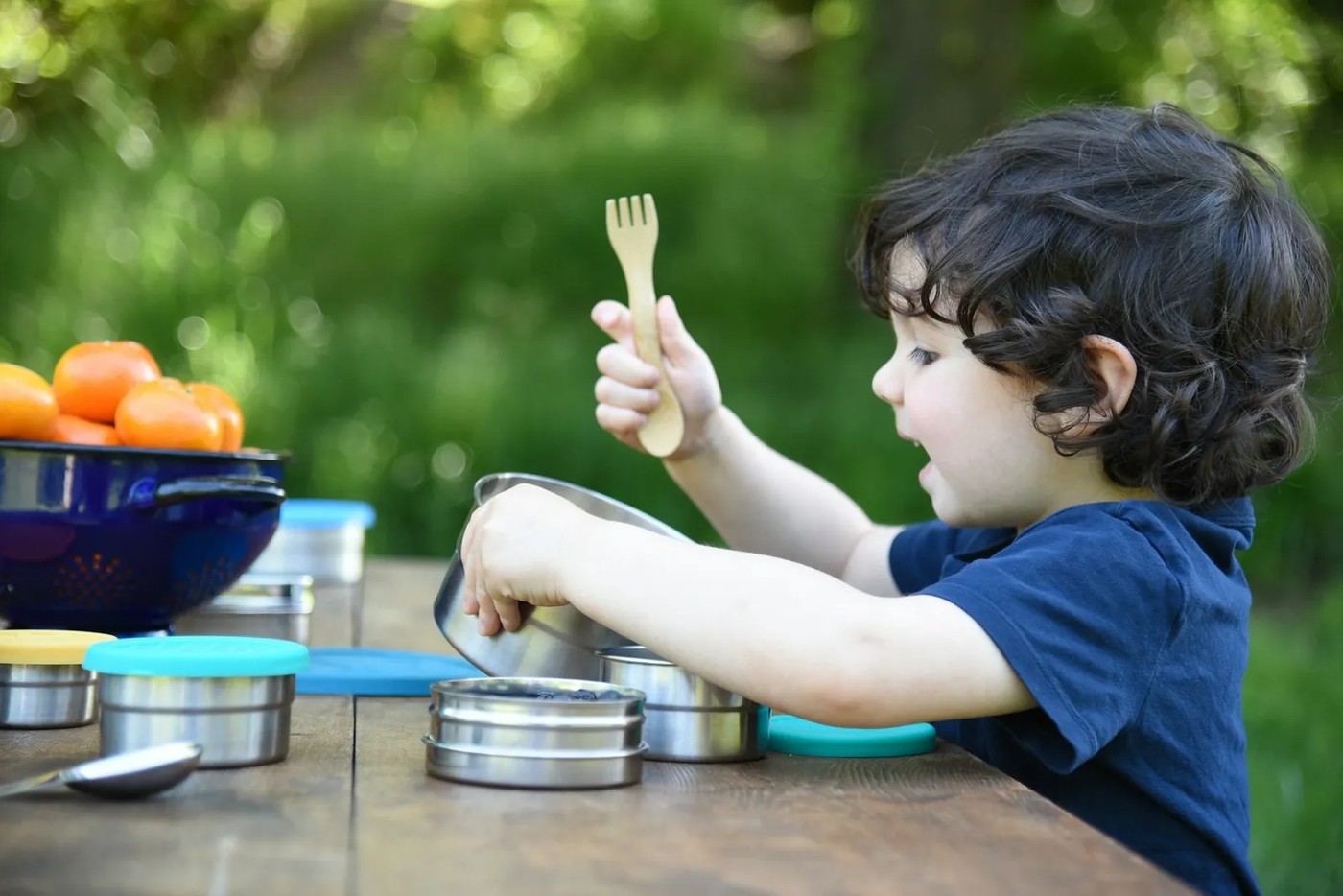
A lunchbox latch, the pages of a favourite book, a jacket zip: start with something your child actually wants to use. A useful question is, “Which part would you like a hand with?”
Fine motor skills are the small movements of the hands and wrists used in everyday tasks, such as holding a pencil, cutting with scissors or brushing teeth.
Choose one everyday task
Think about one recent moment. Perhaps your child wanted to open their lunch but passed the container to you. Write down what they were trying to do and which part they wanted help with. Include things they already do comfortably.
Hand skills come up all through the day. At school, that might mean opening a drink bottle or lunchbox, using a bag zip or opening a food packet. At home, you might notice them while your child gets dressed, eats, draws or builds.
Start with one or two moments you would like to discuss.
Look at the object and the setup
An occupational therapy assessment may consider your child, the activity and the environment together. At the Children’s Hospital at Westmead, for example, OT assessments consider the whole child, the family and the environment they live in.
Useful questions include: was the container unusually stiff? Could your child reach it comfortably? Were they sitting or standing? Was there time to ask for help? Would they choose this item themselves?
Sometimes the conversation turns to the object or the setup. An OT might talk with you about different equipment, or about how your child is seated or positioned for the task.
Make room for a choice
Offer an ordinary choice, such as which of two familiar containers to use. Ask whether your child wants to start, watch, share the task or have you do it this time. You can also ask, “Would you like me to hold it while you try the catch?”
Let your child’s preference guide how much you do together.
Tell the teacher or OT what happens
Tell the teacher or OT where your child needs a hand. A few notes can help you remember the details:
- The task and the object, such as a drink bottle with a twist top.
- The part that was difficult: the lid, latch, zip or packaging.
- Where it happened, and whether the same thing happens at home and at school.
- What your child said or did, and the help they asked for.
- A similar task they manage comfortably.
Ask whether a different container or some help with one step would be worth trying, and agree when to check how it is going.
When to discuss hand skills with someone
You can talk with your GP or child and family health nurse about any concern. They track your child’s development at the routine health and development checks in your child’s Blue Book, but you don’t need to wait for the next check. If your child has lost a skill they used to have, raise it early.
For a difficulty at school, ask what the teacher notices too. A paediatric OT can assess hand skills and how your child manages everyday activities such as dressing and play. Some OTs also work with preschools and schools, so agree what information is shared before anyone contacts your child’s school.
Tell the professional if there is pain or another health concern so the appropriate clinician can be involved.
NSW is introducing Thriving Kids in stages from October 2026. It is a new program for children aged 8 and under with developmental delay or autism who have low to moderate support needs. Your GP or child and family health nurse can still help you work out the next step.
For a question specifically about writing, see our separate guide to children’s handwriting difficulties.