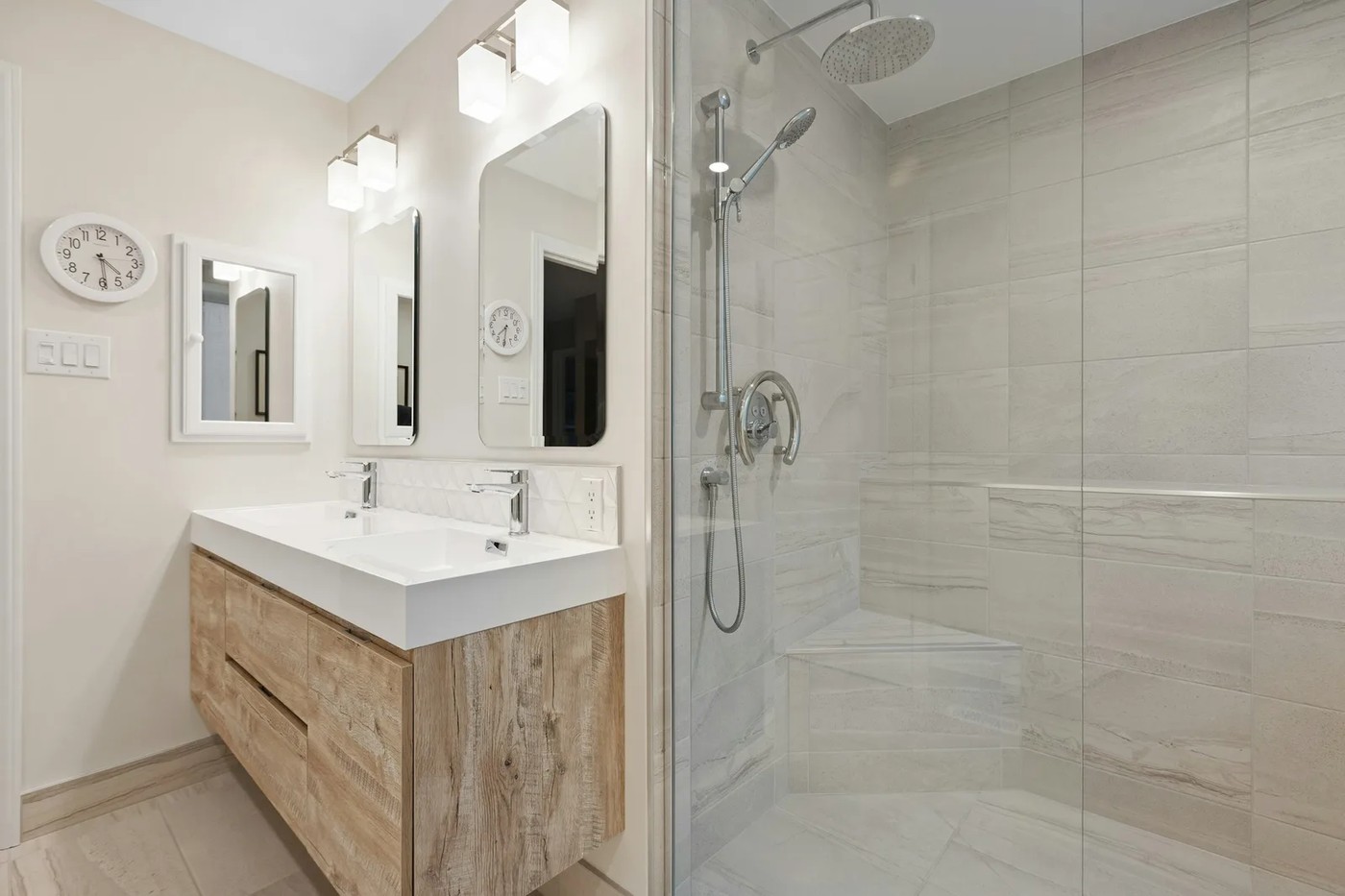
An occupational therapist can make showering and the bathroom safer by analysing how you actually use it, finding the steps that are risky or tiring, and suggesting changes that fit you. That might be a different way of doing the task, equipment such as a shower chair, a grab rail, or a change to the bathroom itself. The aim is to keep you doing what you want to do, as safely as possible.
This guide covers the shower, bath and toilet, fatigue and heat, and what to do after a fall. For how an OT works through any everyday task, see our guide to ADL training.
Why the bathroom needs a closer look
Falls are common as people get older. Healthdirect says 1 in 4 people aged 65 and over have at least one fall a year, and around half of all falls happen in and around the home. The Australian Institute of Health and Welfare (AIHW) reports that falls are the most common cause of injury hospitalisations and injury deaths in Australia. People aged 65 and over were hospitalised for falls 12 times more often than adults aged 25 to 44.
The bathroom puts several risks in one small room: wet, slippery floors, a bath edge or shower hob to step over, and towel rails or taps that people grab for balance, though they aren’t built for it. An AIHW report on falls in older Australians, using 2019-20 data, found that outdoor areas and bathrooms were the most common places at home for falls that led to hospital.
Even a fall without injury matters. Healthdirect notes it can lead to a fear of falling, so people do less, which over time raises the risk of falling again.
What an OT looks at
Healthdirect describes OTs as experts in the link between what you need to do, your health and abilities, and your environment. In a bathroom, that means seeing the routine where it happens, with your agreement, and talking about:
- You: balance, strength, reach, pain, energy, eyesight, memory, and how confident you feel.
- The routine: when you shower, how long it takes, which steps are hard, and who helps, if anyone.
- The room: the shower or bath, the toilet, the floor, lighting, space, and where things are kept.
Say what matters to you. Some people want to keep showering alone. Others are happy to have help with one part, such as washing their feet. Recommendations should start from those goals.
Getting in and out of the shower or bath
Stepping over a bath edge or shower hob can be hard. NSW Health’s home safety checklist recommends grab rails for getting in and out of the shower or bath, and warns against holding the towel rail or taps, because a towel rail isn’t strong enough.
Depending on what the OT sees, options can include:
- A grab rail placed where you actually reach for support.
- A bath board to sit on across the bath, or a shower chair.
- Showering instead of bathing. A Queensland Health fatigue management guide notes that showering uses less energy than getting in and out of a bath.
- A bigger change, such as a step-free shower. The NDIS treats changing a bathroom floor to make a stepless shower as a complex home modification.
Using the toilet, day and night
Healthdirect notes that people may fall when hurrying to the toilet. Tell your doctor if it is hard to get there in time, because some causes of incontinence can be treated.
Things an OT may look at include:
- Height and support. NSW Health suggests a rail next to the toilet or a toilet safety frame to help with getting on and off.
- The route at night. Healthdirect suggests leaving hallway lights on at night. NSW Health suggests a light you can reach from bed, and keeping your walking aid within reach in case you get up at night.
- Getting up slowly. Healthdirect says standing up slowly after sitting or lying down can help prevent dizziness.
- A commode, a toileting support listed under the aged care AT-HM scheme, if getting to the toilet is the problem.
Showering step by step
An OT often breaks a shower into stages to find exactly where the trouble is. Our ADL guide explains how breaking a task into steps works. For showering, common adjustments include:
Before you start
- Put things within reach. NSW Health suggests keeping soap and shampoo where you can reach them without bending, for example in a shower caddy, and having your towel within reach before you get in.
- Test the water temperature. Healthdirect suggests a maximum hot water temperature of 50°C to prevent scalds. A licensed plumber can advise how to set this up for your hot water system.
- Check the mat. NSW Health suggests a slip-resistant mat in the shower recess and bath, hosed and dried regularly so mould doesn’t build up.
Washing, drying and dressing
- Use long-handled aids such as sponges or brushes if bending to your feet is hard, as the Queensland Health guide suggests.
- Consider a hand-held shower, which the NDIS lists among low cost items an OT might recommend.
- Make sure the floor is dry before you walk on it. Healthdirect lists wet floors among common hazards at home.
If memory or planning makes the order hard to follow, written or picture steps can help. With your agreement, an OT can also show family or support workers how to help with one step without taking over the rest.
Fatigue, heat and dizziness
Health service fatigue guides, such as a Central Coast Local Health District COPD booklet and the Queensland Health guide for people with cancer, give similar showering advice:
- Pick your time. Shower when you have the most energy, such as the morning.
- Sit when you can to wash, dry and dress. Sitting uses less energy than standing.
- Take short rests before you are exhausted, rather than pushing through.
- Cut the steam with a fan or an open window or door.
MS Australia notes that fatigue often increases after a hot shower. Healthdirect explains that low blood pressure, including the drop that can happen when you stand up, can cause fainting and increase the risk of falls. A doctor may advise people prone to it to avoid hot showers. If you feel lightheaded, sitting or lying down should help.
If you often feel dizzy or faint in the shower, tell your doctor. An OT can work on the setup and routine, but a doctor or pharmacist should check for medical causes, including medicines.
Equipment and home changes an OT may suggest
Equipment and building work are tools, not the starting point. An OT should match any recommendation to you, your routine and your bathroom, and check you can use it safely. Our article on OT for adults lists common daily living equipment. An OT might weigh up options in this order:
- Change the method first. A different order, sitting, or moving things within reach may be enough.
- Portable equipment, such as a shower chair, bath board, toilet frame or slip-resistant mat. Height matters: the Central Coast booklet notes that a higher seat or toilet aid makes standing up easier.
- Simple fixed items, such as grab rails, a hand-held shower or easier-to-use taps. The NDIS calls these low cost items home adaptations. Ask the OT where rails should go.
- Home modifications, such as a step-free shower, a new bathroom layout, or combining the bathroom and toilet to make room for a shower chair or hoist. These take more planning, and complex work usually needs quotes and building approvals.
These solutions might not suit your needs. Seek professional advice, such as from an OT, before you buy equipment or make changes.
Research supports looking at the home, with limits. A 2023 Cochrane review found high-certainty evidence that reducing fall hazards at home lowers the rate of falls in people at higher risk, such as those who have fallen in the past year, were recently in hospital or need help with daily activities. It made no difference for people not selected for falls risk, and the review found no trials of home modifications that measured falls.
Strength and balance matter too. Healthdirect says there is evidence that balance and movement exercises can prevent harm from falls. NSW Health’s Active and Healthy website lists exercise programs across NSW.
Paying for equipment and home changes
- Support at Home. The Assistive Technology and Home Modifications (AT-HM) scheme gives Support at Home participants separate funding for equipment, such as shower chairs, commodes and non-slip mats, and for home modifications, such as handrails and bathroom redesign. You are assessed for it in your aged care assessment, and all home modifications under it must be prescribed by an occupational therapist. See our guide to aged care funding for OT for tiers and contributions.
- NDIS. The NDIS can fund home modifications and lower cost home adaptations when they meet its funding criteria and relate to your disability support needs. Home modifications need an occupational therapist’s assessment, and more complex work needs a home modification assessor, who is an OT qualified to recommend it. See our guide to using NDIS funding for OT.
If someone falls: when to call 000
Call triple zero (000) and ask for an ambulance after a severe fall. Healthdirect says to call 000 or go to the nearest emergency department if you or someone you care for has a severe fall. Call 000 straight away if the person:
- has hit their head and is unconscious, has a fit, is vomiting, is newly confused, or has blood or fluid coming from the nose or ears (see Healthdirect on head injuries)
- can’t get up, or is hurt and can’t be made comfortable
For advice when it isn’t an emergency, the healthdirect helpline on 1800 022 222 has a registered nurse available 24 hours a day.
NSW Health’s Active and Healthy guide suggests an emergency plan, especially if you live alone: a phone within reach on a low table with key numbers saved, thinking about a personal alarm, and letting trusted people know how to get into your home.
See your doctor after any fall, even if you feel fine. Healthdirect explains that a fall can be a sign of a new medical problem, a side effect of medicines, or changes in balance or strength. This matters even more if you take blood-thinning medicine and have knocked your head.
Bathroom safety with VennCare
VennCare is a mobile occupational therapy service, with home visits across South West Sydney, so an OT can see your bathroom and routine where they happen. Our equipment service covers assessment and prescription of daily living equipment, including showering aids and fall prevention equipment, and training for you and your carers to use it.
For older people, we prepare occupational therapy reports for My Aged Care and Support at Home, including equipment reports, for items such as shower chairs and raised toilet seats, and minor home modification reports. To use Support at Home funding with us, you need an aged care provider that lets you choose your own occupational therapist, such as a self-managed provider. See our aged care reports and the Support at Home price guide.
For NDIS participants, our Home and Living assessments can identify practical changes where the home itself is the barrier, such as bathroom modifications, and our adult therapy service includes fall prevention. We accept NDIS self-managed and plan-managed enquiries, and our NDIS fee guide and calculator gives an estimate for your service and suburb.
Your written quote confirms all charges before you book. Equipment, installation and building work are separate from our OT fees unless your quote includes them, and the funder decides what it pays for.