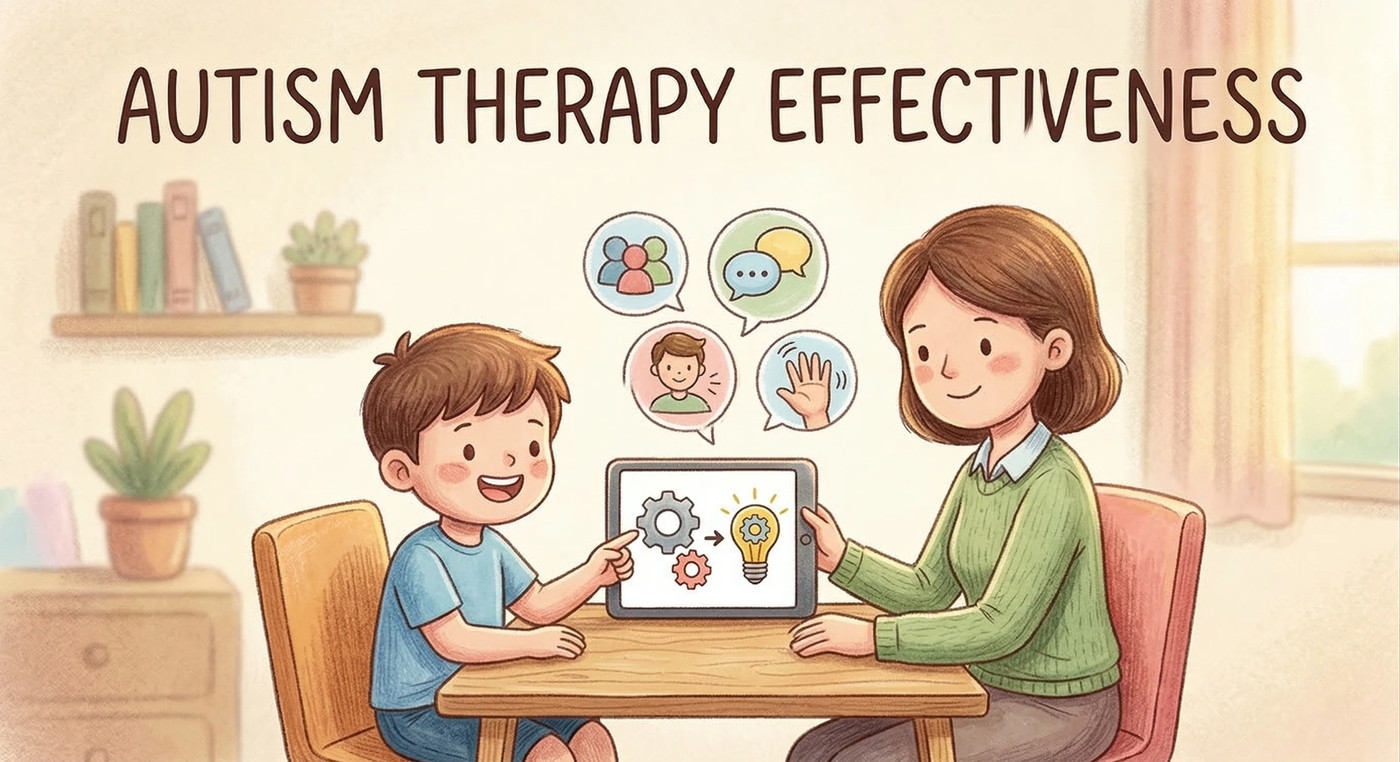
Occupational Therapy (OT) for autism supports individuals in engaging meaningfully with their Daily Occupations; to build independence and enhance well-being. This includes a child's essential tasks like playing and learning, or an adult's work and home management. It addresses diverse challenges in sensory processing, motor skills, social understanding, and executive functioning.
Key Characteristics
- Evidence-backed framework for Autism support.
- Focuses on functional daily living skills.
- A regulated health profession with specific standards.
- Promotes neuro-affirming approaches to development.
Some might question the effectiveness of Occupational Therapy for Autism, especially with some information online about Autism Therapy effectiveness. The concern is real; knowing which interventions truly make a difference for a loved one is crucial.
By the end of this guide, you will understand the robust evidence supporting OT for Autism and identify legitimate therapy options, avoiding common misconceptions about treatment efficacy.
What defines Occupational Therapy in the context of Autism
Occupational Therapy for Autism focuses on helping individuals participate more fully in everyday life activities, or 'Occupations'.
For a young child, these 'Occupations' are the fundamental building blocks of their world: playing, learning, and interacting with others. For an adult, it shifts to include work, household responsibilities, and managing personal independence. The core goal of Occupational Therapy (OT) is to improve a person's ability to engage in these meaningful activities, promoting their overall well-being and independence.
OT addresses a range of challenges that can impact an individual's engagement with their world. This includes difficulties with sensory processing, where everyday sights, sounds, or textures might be overwhelming or understimulating.
It also targets motor skills, both fine (like handwriting or buttoning clothes) and gross (like balance or coordination for sports).
Furthermore, OT supports the development of social understanding, helping individuals interpret social cues and engage in reciprocal interactions.
Finally, it assists with executive functioning skills, such as planning, organising, and transitioning between activities, which are often areas of difficulty for individuals on the spectrum.
Evaluation of daily living skills for individuals
Occupational therapists assess how individuals manage Activities of Daily Living (ADLs) and Instrumental Activities of Daily Living (IADLs) to pinpoint specific support needs.
ADLs are fundamental self-care tasks essential for basic functioning. We examine these closely:
- Bathing and Showering Evaluating independence in hygiene routines.
- Dressing Assessing the ability to select and put on clothing appropriately.
- Grooming Looking at skills like brushing teeth and hair.
- Eating Observing for challenges with feeding or mealtime engagement.
Beyond personal care, IADLs involve more complex tasks needed for independent community living. These include:
- Meal Preparation From planning to cooking.
- Money Management Budgeting, paying bills, and shopping.
- Household Management Tasks like cleaning and laundry.
- Using Transportation Navigating public transport or driving.
Understanding performance in these areas allows us to create tailored interventions that amplify talents and support authentic living.
Evolution of Autism diagnosis and therapeutic approaches
The diagnostic criteria for Autism have evolved significantly since the term was first coined in 1911 by Eugen Bleuler. At that time, Bleuler used 'Autism' to describe a symptom of schizophrenia—specifically a patient's withdrawal into a private inner world—rather than a distinct developmental disorder, a distinction that would not be formally recognised for another three decades.
Leo Kanner, in 1943, further shaped our understanding by describing 11 children with unique characteristics, including an intense desire for solitude and an insistence on sameness. He termed this condition "early infantile Autism." Just a year later, Hans Asperger identified a similar pattern in children, which he called "psychopathy," focusing more on social interaction difficulties and specific interests.
A major shift occurred in the 1980s when the concept expanded to encompass a wider range of presentations, leading to the idea of an "Autism spectrum disorder." This acknowledged that Autism wasn't a single entity but a spectrum of conditions with varying degrees of impact.
This evolution culminated in the 2013 DSM-5 update. Here, separate diagnoses like autism disorder, Asperger’s syndrome, and childhood disintegrative disorder were unified under the single umbrella term Autism Spectrum Disorder (ASD). This move aimed to create a more consistent diagnostic approach and better reflect the continuous nature of the condition. This historical progression underscores how our understanding of Autism has grown, directly influencing the development and refinement of therapeutic approaches.
Scientific evidence and effectiveness of OT for Autism
Scientific evidence supporting the effectiveness of Occupational Therapy (OT) for Autism, while extensive, requires careful evaluation by practitioners. It is widely observed across the industry that intervention approaches continue to evolve with growing diagnostic rates. In Australia, the estimated number of people with Autism rose from 64,400 in 2009 (ABS) to 290,900 in 2022 (ABS), with current 2026 government figures indicating that at least 3.8% of school-aged children (roughly 1 in 26) are identified as on the autism spectrum (Health.gov.au).
OT interventions for Autism address critical areas such as sensory regulation, motor skill development, and executive functioning. These domains are interconnected, with improvements in one often supporting progress in others.
Research consistently points to the benefits of OT in helping individuals on the spectrum manage sensory sensitivities. Many individuals with Autism experience the world differently through their senses, leading to over- or under-responsiveness. OT provides strategies and tools to help modulate these sensory inputs.
Motor skills, both fine and gross, are another key focus. This includes challenges with handwriting, coordination, and balance. OT works on improving these abilities, which can positively impact daily tasks and participation in activities.
Furthermore, OT plays a significant role in enhancing executive functioning skills. These cognitive processes, such as planning, organisation, and impulse control, are often areas of difficulty for individuals on the spectrum. OT helps build these essential life skills. The Therapy Effectiveness for Autism is often measured by observable improvements in these interconnected domains, facilitating greater independence and participation in life.
The role of sensory based interventions in Autism support
Sensory-based interventions are fundamental to Occupational Therapy for Autism, addressing how individuals process and respond to their environment. These strategies acknowledge that the way a child or adult interacts with sensory input profoundly impacts their ability to engage in daily tasks and participate in activities.
The theory holds that sensory processing differences are foundational, influencing motor skills, attention, and emotional regulation. When an individual struggles to filter or interpret sensory information – be it touch, sound, sight, or movement – it can disrupt their capacity to learn and connect. Sensory-based interventions are designed to modify how children process stimuli to improve self-regulation, a key goal for many families. You can find more about this in the research evidence based on sensory-based interventions.
However, the landscape of sensory interventions isn't without nuance. While incredibly popular and often providing immediate perceived benefits for many, the evidence for Autism-informed Occupational Therapy supporting every specific tool or technique is still evolving. It's a point that ethical practitioners, like our team at VennCare, are transparent about.
We understand that definitive, large-scale research isn't available for every single sensory strategy. This is why our approach prioritises understanding your unique sensory profile and goals. We then tailor interventions, drawing on established principles while also being clear about what areas are still under active investigation within the broader Autism research community. Our commitment is to evidence-informed practice, ensuring you have accurate information to make the best decisions for your support.
Biological mechanisms and neuroplasticity in therapy
Our approach is grounded in the understanding that the brain is remarkably adaptable. Occupational Therapy interventions are designed to leverage neuroplasticity, the brain's innate capacity to reorganise itself by forming new neural connections.
This rewiring process isn't magic; it’s built through repetition and meaning. When individuals repeatedly engage in targeted, purposeful activities, their brains establish and strengthen neural pathways.
Think of it like forging a new trail through a forest. The first few times, it’s difficult and requires significant effort.
But with consistent use, the trail becomes clearer, wider, and easier to travel. Similarly, repeated practice in OT sessions helps to wire the brain for improved motor control, better sensory processing, and more effective emotional regulation.
This biological basis explains why consistent, evidence-informed practice is so effective. It directly influences how the brain develops and functions.
Transitioning to neuro affirming Autism OT practices
The shift in Autism Occupational Therapy (OT) is moving towards a neuro-affirming approach, prioritising acceptance of autism neurology over conversion. This newer model contrasts with older "bottom-up" therapies that solely focused on sensory regulation as the primary goal.
Instead, neuro-affirming Autism OT centres on the individual's strengths and desired functional outcomes. Therapists now work collaboratively with clients on the spectrum, viewing their unique ways of being not as deficits to be corrected, but as inherent traits to be understood and supported. This means respecting an individual's sensory preferences and communication styles, even if they differ from neurotypical norms.
This client-led methodology ensures that therapy goals are personally meaningful and relevant. It’s about enhancing a person's ability to engage in their chosen life activities, whether that's participating in a hobby, managing daily routines, or building social connections, in a way that feels authentic to them. We see this as a vital evolution in how OT can best serve the autism community.
Common misconceptions about Autism therapy legitimacy
Many persistent myths surround the legitimacy of Autism therapies, and Occupational Therapy (OT) is no exception. It's vital to address these misconceptions head-on to ensure families receive accurate, evidence-based support.
A significant, though thankfully debunked, misconception was the link between vaccines and Autism. This claim originated from a fraudulent 1998 study by Andrew Wakefield. This paper was later retracted in 2010 by The Lancet, and Wakefield lost his medical licence due to his unethical conduct and falsified data. Numerous subsequent studies have unequivocally shown no causal link between vaccines and Autism.
Another common misunderstanding is that Occupational Therapy for Autism is simply "playtime." While play is central, it's crucial to understand that for children, play is their primary occupation. Through play, they learn to interact with their environment, develop motor skills, practice communication, and build social understanding.
Our occupational therapists use play-based interventions strategically. They observe a child's natural engagement and then introduce specific therapeutic goals within that play context. This makes learning feel organic and enjoyable, but it's highly targeted.
For instance, a therapist might use building blocks not just for fun, but to work on fine motor control, hand-eye coordination, and problem-solving. Rolling a ball could target bilateral coordination and understanding cause-and-effect. These activities are designed to build foundational skills that directly translate to everyday life tasks.
The notion that OT is about making individuals "less autistic" is also a harmful myth. Modern, neuro-affirming OT, like the approach we champion, focuses on developing skills and supporting authentic living. It’s about equipping individuals with the tools and strategies they need to navigate their world and participate in activities that are meaningful to them, respecting their unique neurotype throughout the process. Therapy aims to build skills and reduce barriers, not to change who someone fundamentally is.
Choosing a legitimate occupational therapist for you or your close family member
Finding the right occupational therapist for you or your close family member is paramount to ensuring your loved one receives authentic, effective support. Our approach at VennCare is built on transparency and tailored care, making this process clear.
To start, we invite you to book a free discovery call. This initial conversation allows us to understand you or your close family member's unique situation and discuss how our specialised services can assist. It’s a no-obligation step to see if we’re the right fit.
Following this, families looking for high-quality care can submit an NDIS or standard referral to begin the process. We offer clear pathways whether you are accessing services through the NDIS or Aged Care. This ensures a smooth transition into our support system.
At VennCare, meticulously tailored sessions form the core of our practice. Our therapists develop individual plans based on comprehensive assessments. This personalised approach guarantees that every therapy session is directly relevant to you or your close family member's specific goals and needs.
We understand that clear communication is key to success. Therefore, our services are available in English, Cantonese, and Mandarin. This commitment to multilingual support ensures families can fully understand their progress and actively participate in their therapeutic journey.
Local therapy options in South West Sydney
Accessing specialised Occupational Therapy (OT) services in South West Sydney is straightforward. We provide these dedicated services across various local areas, bringing expert support closer to your home.
Our presence in key South West Sydney locations, including our clinic space at Fairfield West and Liverpool, ensures families have convenient access to legitimate, evidence-informed care. We also extend our services to areas like Edmondson Park, offering low travel fee to ensure efficient fund allocation.
This localised approach means you don't have to travel far to receive the tailored support you or your close family member needs. Our therapists are committed to delivering high-quality care right within your community.
Frequently asked questions about OT for Autism
When families ask about Occupational Therapy (OT) for Autism, they often have specific questions about what to expect and how it helps.