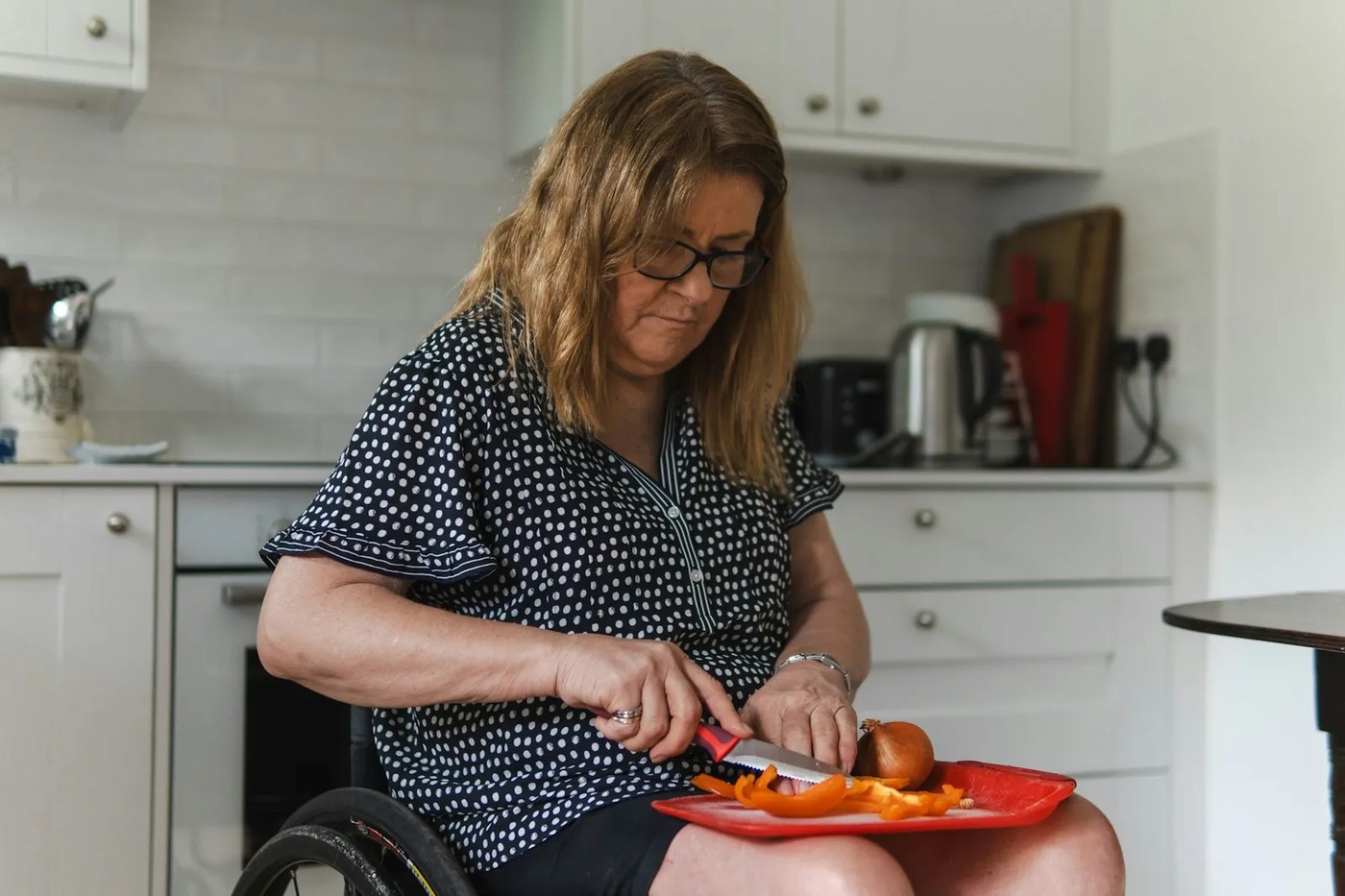
You may have been told to find an occupational therapist, but still be unsure whether to book regular sessions, request a report or ask about equipment. Start with what you want to do in everyday life and the kind of help you need.
Your NDIS plan may help pay for occupational therapy. The scheme provides funding for eligible people with disability. To use it for OT, the proposed service needs to meet the therapy funding criteria and fit your plan.
What does an occupational therapist do?
OT focuses on activities that matter to you, such as looking after yourself, studying, working and taking part in community life. Your therapist will discuss your strengths, difficulties and goals with you.
NDIS therapy supports can help with everyday areas such as personal care, moving around your home, communication, problem-solving and using public transport.
When you enquire, it helps to describe a moment in your day that you would like to make easier. For example: “I lose track of the steps when getting ready,” or “I need help finding equipment I can use comfortably.” Your OT can explore what is getting in the way and discuss suitable next steps with you.
Ongoing sessions, FCA reports and equipment assessments
Ongoing occupational therapy
The NDIA describes two kinds of therapy support. Capacity building therapy helps you build skills and independence, with goals, outcomes and a timeframe to work towards. Maintenance therapy helps you keep your ability to do everyday tasks, or prevent or delay it getting worse. Some people use a mix of both.
Your therapist will assess your needs and work with you on a therapy plan. Under the NDIA’s therapy supports guideline, the plan needs to show how the approach and your goals will be measured, and it may include things to practise at home with family or friends. Before a plan reassessment, the NDIA may ask for evidence from your therapist, so ask your OT how progress will be recorded and shared.
At VennCare, enquiries about ongoing support can relate to children’s everyday skills or adult daily life. If routines, planning or starting tasks are your priority, our executive function article explains the evidence and its limits.
Functional capacity assessments and reports
An FCA examines daily functioning across six areas: communication, learning, mobility, self-care, self-management and social interaction. An occupational therapist, physiotherapist, psychologist or medical specialist can do the assessment, and it can take anywhere from 1 to 10 hours.
You don’t need an FCA to be eligible for the NDIS, but it can provide evidence about how your disability affects everyday life. The NDIA uses this evidence when deciding which supports to fund, and a report may recommend assistive technology, therapy or home modifications. For more detail, read our guide to preparing for an FCA.
Assistive technology and equipment
Equipment work may involve advice, assessment, a trial and follow-up. The NDIA groups assistive technology by the cost of each item and asks for different evidence at each level:
- Low cost: under $1,500 per item.
- Mid cost: $1,500 to $15,000 per item. You need written evidence, such as a letter, email or report from your allied health practitioner or assistive technology adviser. It doesn’t have to be a formal assessment.
- High cost: over $15,000 per item. You need an assessment report from a qualified assistive technology assessor, and a quote.
Ask whether a trial makes sense, and confirm the scope of the assessment before purchasing. If your funding is NDIA-managed, the item needs to be bought from a registered NDIS provider.
VennCare’s equipment service covers items such as showering aids, wheelchairs and specialised seating. If your question concerns the support you need in your living arrangement, see our home and living assessment service and describe the purpose of the report in your enquiry.
Check your plan before booking
Since 3 October 2024, NDIS funding can only be spent on NDIS supports or approved replacements. The NDIA says that in most cases this is unlikely to change the supports people already use.
How your funding is managed affects which providers you can use. With NDIA-managed funding, you must use registered NDIS providers. Self-managed and plan-managed participants can usually choose registered or unregistered providers, with exceptions for some supports, such as plan management itself.
All providers, registered or not, must follow the NDIS Code of Conduct. With any provider, it’s worth checking their qualifications, insurance and safety checks. Occupational therapists must be registered with Ahpra, and you can look them up on the public register of practitioners.
VennCare accepts NDIS self-managed and plan-managed enquiries. Before booking, confirm:
- Which support you are arranging: ongoing sessions, a particular report or equipment work.
- Whether your plan has funding that can be used for that support.
- How the relevant funding is managed and who receives the invoice.
- What the service agreement includes and how changes will be agreed.
The NDIA recommends a written service agreement so you and your provider understand how you’ll work together. It can set out the supports, the cost, how the provider will be paid and how to change the agreement.
If you are unsure how your plan applies, ask your NDIS contact; a plan manager or support coordinator can also help with the parts they manage. Confirm the funding arrangements alongside your written quote.
If the support is for a young child
The NDIS early childhood approach supports children younger than 6 with developmental delay or developmental concerns, and children younger than 9 with disability. Your child doesn’t need a diagnosis to get support through it.
NSW is also introducing Thriving Kids in stages from October 2026. It is a new program for children aged 8 and under with developmental delay or autism who have low to moderate support needs. Your GP or child and family health nurse can help you work out where to start.
OT fees when using NDIS funding
The current NDIS pricing arrangements set maximum prices for NDIA-managed and plan-managed supports. For the total cost, ask for a written quote that sets out the time and work involved in your service.
For VennCare, use the NDIS fee guide and calculator to choose your service and suburb. The amounts are estimates. Check the expected appointment time, report work and any eligible agreed travel charges. Additional visits or work can change the quote; confirm these before going ahead. Equipment purchases are separate from an assessment quote unless expressly included.
Starting OT with VennCare in South West Sydney
VennCare provides mobile OT in Edmondson Park and surrounding South West Sydney areas. Tell us what you want help with, your suburb and how your funding is managed. For eligible services, you can also ask about telehealth; our OT will confirm whether it is feasible for your individual needs.
Before your first appointment, read our questions to ask an OT. If you are comparing professions, our OT versus physiotherapy guide explains the different starting points.