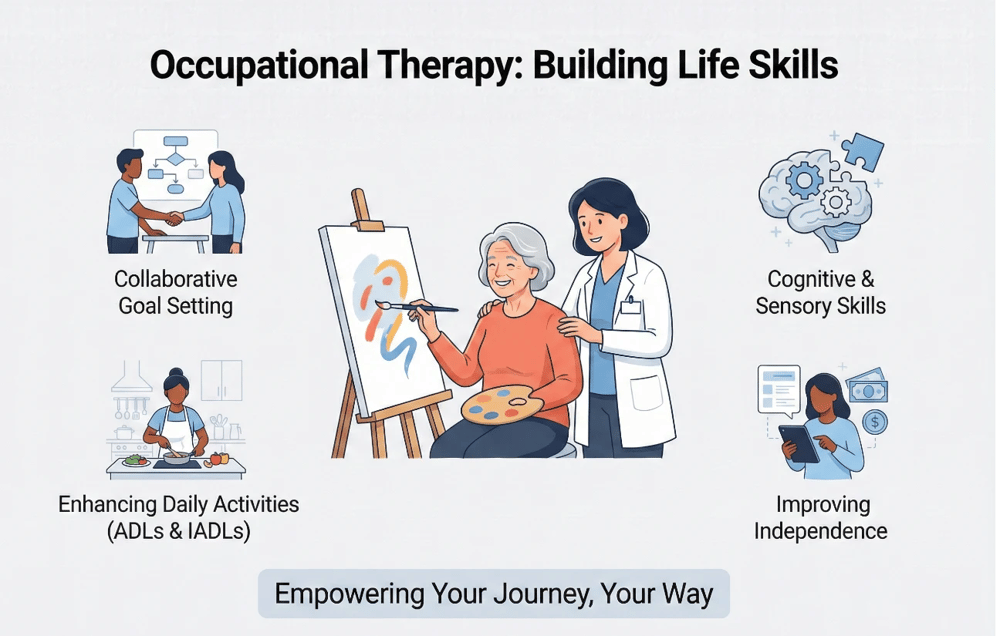
Occupational Therapy for adults is a client-centred practice focused on enabling individuals to achieve independence and satisfaction in all meaningful activities of daily life. It helps adults overcome physical, cognitive, or mental health challenges to participate fully in their chosen occupations, crucial for adult OT services and OT for independence. This includes support for those with disability.
Core Components:
- Focuses on meaningful daily activities (occupations).
- Addresses physical, cognitive, and mental health barriers.
- Aims for functional independence and improved quality of life.
- Provides client-centred, tailored interventions.
Many people confuse Occupational Therapy with physical therapy, but OT is uniquely the science of doing. For adults, this means regaining the ability to perform occupations—not just jobs, but any meaningful daily activity, from managing finances to enjoying hobbies. We see daily how critical this distinction is for real-world functionality.
By the end of this guide, you will clearly understand what adult Occupational Therapy truly involves, enabling you to identify how these specialised services can transform your daily living, without the common confusion about its scope.
Understanding the core role of Occupational Therapy for adults
 Occupational Therapy for adults centres on helping individuals regain
their ability to participate fully in everyday life. This
client-centred practice views daily "occupations" as the
fundamental building blocks of a person's life, encompassing
everything they need or want to do.
Occupational Therapy for adults centres on helping individuals regain
their ability to participate fully in everyday life. This
client-centred practice views daily "occupations" as the
fundamental building blocks of a person's life, encompassing
everything they need or want to do.
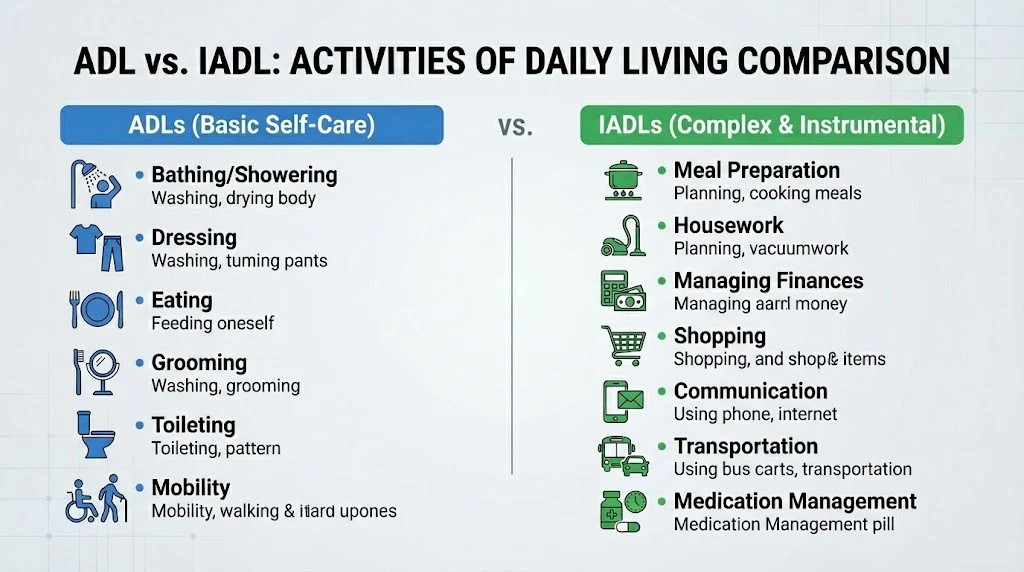
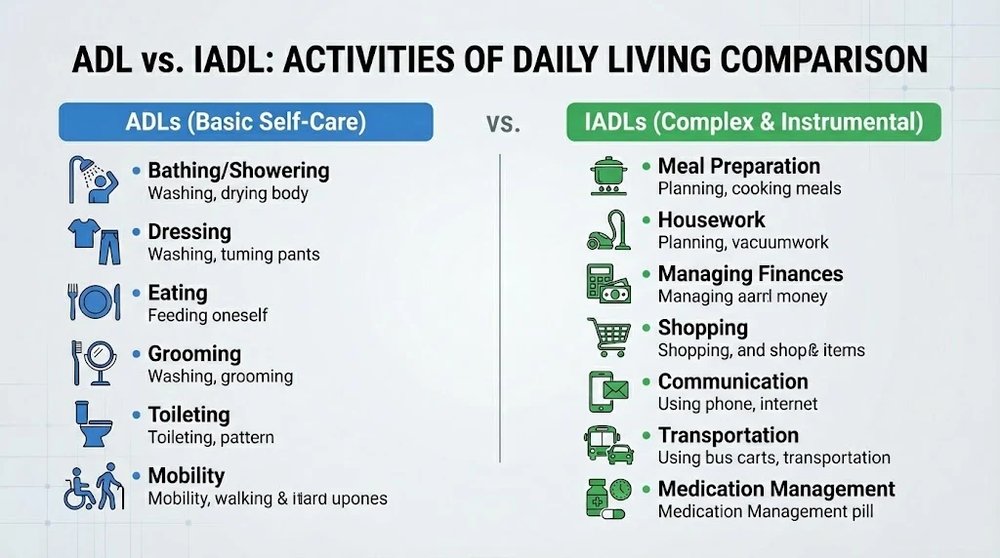
Occupations are essentially the meaningful activities that fill your day. For adults, this includes basic Activities of Daily Living (ADLs), such as bathing, dressing, grooming, and eating.
But it extends beyond these essentials. Occupational Therapy also addresses Instrumental Activities of Daily Living (IADLs). These are more complex tasks necessary for independent living, like cooking meals, managing finances, household chores, medication management, and engaging in social participation. OT is a healthcare profession that helps people of all ages participate in the things they want and need to do through the therapeutic use of everyday activities.
We focus on what matters most to you. This might mean adapting your home environment, developing new strategies for managing energy levels, or improving fine motor skills needed for a cherished hobby. Our aim is to support your independence and enhance your quality of life by restoring your capacity to engage in these vital occupations.
The evolution and impact of adult Occupational Therapy services
Occupational Therapy for adults has transformed from its early 20th-century roots into a vital, evidence-based profession that significantly impacts lives today. Established in 1917 by pioneers like Eleanor Clarke Slagle, Occupational Therapy initially focused on providing meaningful activity for patients in mental health settings, viewing occupation as a therapeutic tool.
Over the decades, adult OT services have expanded dramatically. This growth reflects a deeper understanding of how daily activities shape well-being and recovery.
Today, adult Occupational Therapy services are integral to rehabilitation, chronic disease management, and promoting healthy ageing, helping individuals participate fully in their desired lives.
Occupational Therapy for specific chronic conditions and illnesses
Occupational Therapy is a vital component of managing a wide range of chronic conditions, helping individuals maintain independence and improve their quality of life.
Occupational Therapy for specific chronic conditions and illnesses
Occupational Therapy directly addresses the challenges posed by specific chronic conditions, tailoring interventions to an individual's unique needs and goals. This approach moves beyond general support, targeting the specific functional impairments that arise from conditions like arthritis, chronic pain, diabetes, and heart disease.
Our team focuses on practical strategies that integrate seamlessly into daily life. We aim to amplify strength, enabling individuals to continue engaging in meaningful activities despite their diagnosis.
Here's a look at how Occupational Therapy supports individuals with various chronic conditions:
| Condition | Occupational Therapy Interventions | Key Outcomes |
|---|---|---|
| Arthritis | Joint protection techniques, adaptive equipment training (e.g., for dressing, cooking), pain management strategies, energy conservation. | Reduced pain, improved joint function, sustained participation in hobbies and work, prevention of further joint damage. |
| Chronic Pain | Pacing strategies, relaxation techniques, activity modification, development of coping mechanisms, adaptive strategies for daily tasks. | Improved pain management, increased engagement in valued activities, reduced fear avoidance, enhanced emotional well-being. |
| Diabetes | Foot care education and self-management strategies, meal preparation adaptations, strategies for managing blood sugar during activities. | Prevention of complications (e.g., foot ulcers), improved self-management skills, sustained engagement in lifestyle activities. |
| Heart Disease | Energy conservation techniques during ADLs and IADLs, pacing strategies, recommendations for home modifications to reduce exertion. | Increased independence in daily tasks, reduced fatigue, improved cardiovascular health through safe activity engagement, enhanced safety at home. |
| Respiratory Illnesses | Breathing techniques, energy conservation to manage shortness of breath, adaptive equipment for daily tasks, environmental modifications. | Improved ability to perform daily activities with less breathlessness, increased endurance, enhanced quality of life. |
Many individuals with chronic conditions also experience Occupational Therapy for disability, where interventions focus on maximizing functional independence and participation in all life roles.
This structured support helps to re-establish routines and adapt environments, making everyday life more manageable.
Managing neurodegenerative diseases like Parkinson's and MS
Occupational Therapy provides practical strategies to help individuals manage the daily challenges of neurodegenerative diseases like Parkinson's and Multiple Sclerosis. We focus on maintaining independence and improving quality of life by adapting activities and environments.
For Parkinson's disease, our interventions address motor symptoms that impact daily tasks. We work with clients to develop techniques for managing tremors during eating, often through adaptive utensils and mindful eating strategies. This might involve using weighted cutlery or practicing controlled movements to reduce spills and increase mealtime confidence.
We also help individuals with Parkinson's implement strategies to improve balance and mobility, reducing the risk of falls. This includes recommending home modifications and teaching safe movement patterns for everyday activities like getting in and out of chairs or navigating stairs.
With Multiple Sclerosis (MS), energy conservation techniques are paramount due to pervasive fatigue. Our approach centres on teaching individuals how to pace their activities, balance rest with exertion, and prioritise tasks. This prevents the boom-and-bust cycle that can exacerbate fatigue.
We assist individuals with MS in identifying personal energy triggers and developing personalised schedules that incorporate sufficient rest periods. This allows for more consistent participation in meaningful activities and reduces overall exhaustion.
Furthermore, Occupational Therapy addresses cognitive changes that can accompany neurodegenerative conditions, such as memory issues or slowed processing speed. We introduce cognitive strategies and assistive tools to support daily functioning and enhance engagement.
Our goal is to ensure that individuals with Parkinson's and MS can continue to participate in the activities they value, amplifying their strength and fostering authentic living despite their diagnosis.
Recovery support for cancer survivors and post-COVID syndrome
Occupational Therapy offers tailored support for cancer survivors and individuals experiencing post-COVID syndrome, addressing the profound physical and cognitive impacts these conditions can leave.
The return to everyday life after cancer treatment or a severe COVID-19 infection often involves significant challenges. Many survivors grapple with lingering fatigue, reduced physical endurance, and a noticeable decline in cognitive function often described as "brain fog." Occupational therapists work with adults to create personalised strategies that help them gradually regain strength and cognitive clarity.
We begin by assessing an individual's current energy levels and pacing abilities. Developing a structured approach to daily activities is crucial for managing exhaustion. This involves breaking down tasks into smaller, manageable steps and scheduling periods of rest. For those returning to work or hobbies, therapists help identify sustainable activity levels and introduce adaptive techniques to conserve energy.
Cognitive retraining is another key area. Therapists employ specific exercises and strategies to improve attention, memory, and executive functions that may have been affected. This might include using memory aids, organising tools, or practicing mindfulness techniques to enhance focus.
The ultimate aim is to support a safe and gradual reintegration into valued roles and activities. We help individuals rebuild their confidence and independence, allowing them to amplify their strength and live more authentically. This might involve modifying their home environment for easier navigation or adapting their work tasks to accommodate ongoing recovery needs.
How occupational therapists address adult mental health conditions
Occupational therapists support adults facing mental health conditions by focusing on their daily functioning and ability to engage in meaningful activities. We help individuals develop practical strategies to manage symptoms and improve their quality of life.
Depression and Anxiety: Rebuilding Daily Momentum
For adults experiencing depression or anxiety, the overwhelming nature of daily tasks can be a significant barrier. Occupational therapists work to break down complex functional problems into manageable steps. This approach helps build confidence and fosters skill development, making overwhelming days feel less daunting.
We assist in establishing consistent routines. This includes planning for sleep, meals, hygiene, and engaging in activities that promote well-being, even when motivation is low.
PTSD: Sensory Navigation and Emotional Stability
Occupational therapists employ sensory modulation techniques to help adults with PTSD manage triggers and sensory overload. This involves creating personalised "sensory toolkits" or making environmental adjustments that promote a sense of calm and control.
These strategies can be particularly useful in public or workplace settings, enabling individuals to engage more comfortably and safely. We help adults identify their sensory needs and develop coping mechanisms to regulate their emotional responses effectively.
Schizophrenia: Promoting Independence and Social Engagement
For individuals with schizophrenia, Occupational Therapy focuses on enhancing daily living skills and social participation. This can include support with medication management, developing routines for personal care, and practicing skills for community integration.
We aim to amplify strength by identifying strengths and interests that can be incorporated into therapeutic goals. This approach supports a more authentic and independent life, helping individuals reconnect with their communities and pursue valued roles.
Establishing functional routines for depression and anxiety
Breaking down overwhelming days into manageable steps is a core strategy occupational therapists use to combat the inertia of depression and anxiety. This approach is fundamental because it helps build confidence and fosters crucial skill development.
When faced with tasks that feel insurmountable, a structured routine acts as a roadmap. We focus on identifying small, achievable actions that can be consistently performed.
For instance, getting out of bed might be the first hurdle. Instead of focusing on the entire day, we might break that down into: 1. Sit up. 2. Swing legs over the side of the bed. 3. Stand up. Each small success reinforces capability.
This process allows us to build momentum incrementally. It's about creating a sense of accomplishment, however small, to counteract feelings of hopelessness.
We often create visual schedules or checklists. These provide a clear, tangible guide for the day.
Consistency is key; a predictable structure reduces decision fatigue and anxiety.
This structured approach is not about rigid control, but about creating a supportive framework. It acknowledges the significant effort required to engage in daily activities when mental health challenges are present. By segmenting tasks, individuals can see progress, which is a powerful antidote to the paralysis that depression and anxiety can bring.
Sensory modulation and emotional regulation for PTSD
Living with PTSD often means navigating a world that feels overwhelmingly intense. Triggers, whether a sudden loud noise or a particular smell, can send someone spiraling into distress. Occupational therapists (OTs) help individuals build personalised sensory toolkits and adapt their environments to manage these intense reactions.
OTs work with individuals to identify specific sensory sensitivities. These can range from an aversion to bright lights or certain textures to an oversensitivity to sounds. The goal is to create strategies that reduce sensory overload and promote a sense of calm, even in demanding situations.
Creating a Sensory Toolkit for PTSD
Imagine a personalised kit, ready for when the world feels too much. This toolkit is not about avoiding triggers entirely, but about having immediate, effective coping mechanisms. We help clients curate items that bring comfort and help them regain control.
- Auditory Dampening: Noise-canceling headphones or earplugs can significantly reduce the impact of sudden or prolonged loud noises.
- Visual Regulation: Sunglasses or a brimmed hat can lessen the intensity of bright lights, which can be disorienting. For some, having a small, dim light source can be grounding.
- Tactile Comfort: A weighted lap pad or a soft, textured object can provide calming input through touch. Some find smooth stones or fidget toys helpful.
- Olfactory Anchors: A small vial of a calming essential oil, like lavender, can serve as a grounding scent during moments of anxiety.
These are not just random objects; each item is chosen for its specific ability to provide predictable, calming sensory input.
Environmental Adjustments for Stability
Beyond a portable toolkit, OTs guide individuals in modifying their immediate surroundings. This could be at home, at work, or in public spaces.
- Home Base: Creating a "calm corner" at home with soft lighting, comfortable seating, and limited sensory input can provide a safe retreat.
- Workplace Strategies: Discussing sensory needs with an employer can lead to adjustments like a quieter workspace, permission to use headphones, or flexible lighting options. Implementing these changes often requires open communication and a clear explanation of the benefits.
- Public Navigation: Planning outings during less crowded times or identifying quiet spots in advance can reduce potential overwhelm. Some individuals find it helpful to carry a small card discreetly explaining their sensory needs if they become distressed.
Our approach emphasises that sensory modulation is an active, ongoing practice, not a one-time fix. By understanding individual responses and creating tailored strategies, we empower individuals to reclaim their peace and engage more fully with their lives.
Practical OT interventions for physical independence
 Occupational therapists (OTs) help individuals regain or enhance
physical abilities essential for daily life. They do this by focusing on
functional tasks and tailored exercises.
Occupational therapists (OTs) help individuals regain or enhance
physical abilities essential for daily life. They do this by focusing on
functional tasks and tailored exercises.
Individualised Treatment Plans
OTs develop personalised plans based on a thorough assessment of your current physical capabilities and your specific goals. This isn't a one-size-fits-all approach.
We look at the underlying reasons for any physical challenges and create a roadmap designed just for you. This plan then forms the basis for all subsequent interventions.
Motor Skill Exercises
Targeted exercises are designed to improve coordination, strength, and dexterity. These might include:
- Fine Motor Activities: Practicing with smaller objects or intricate tasks to refine finger and hand movements. This could involve buttoning clothes, writing, or manipulating small tools.
- Gross Motor Activities: Engaging in exercises that involve larger muscle groups to enhance balance, coordination, and overall body control. Examples include walking, reaching, or performing functional movements like standing from a chair.
These exercises are progressed systematically as your abilities improve.
Balance Training
Fall prevention is a key aspect of physical independence. OTs implement specific balance training programs tailored to your needs.
This involves exercises that challenge your equilibrium in safe, controlled environments. It can range from simple weight shifts to more complex activities that simulate real-world scenarios. The goal is to build confidence and reduce the risk of falls, allowing for greater freedom of movement.
Recommended adaptive equipment and home modifications
Occupational therapists recommend specific adaptive equipment and home modifications to make daily tasks safer and more manageable for individuals with physical limitations. These solutions bridge the gap between a person's current abilities and the demands of their environment, promoting independence and reducing reliance on others.
Essential Adaptive Equipment
Several types of equipment can significantly improve function at home.
-
For Eating:
- Built-up handles: These make utensils easier to grip for individuals with arthritis or weakness.
- Rocker knives: Allow for cutting food with minimal wrist motion.
- Plate guards: Prevent food from being pushed off the plate.
-
For Dressing:
- Dressing sticks: Help reach and pull up clothing items without excessive bending.
- Button hooks: Assist with fastening buttons, especially for those with limited hand dexterity.
- Long-handled shoe horns: Make putting on shoes easier.
-
For Mobility:
- Grab rails: Installed in bathrooms provide secure points for support in showers, tubs, and near toilets.
- Transfer benches: Aid in safely moving from a wheelchair or walker into a bathtub or shower.
- Raised toilet seats: Reduce the distance needed to sit down and stand up.
- Walkers and Canes: Provide stability and support during ambulation. We often recommend walkers with wheels and brakes for added safety and control.
Strategic Home Modifications
Beyond specific tools, simple changes to the home environment can have a profound impact.
-
Bathroom Safety:
- Non-slip mats in showers and tubs.
- Ensuring adequate space for mobility aids.
-
Kitchen Accessibility:
- Rearranging frequently used items to easily reachable shelves.
- Consider slide-out shelves or pull-out drawers to improve access to cabinets.
-
Living Areas:
- Removing throw rugs that can cause tripping hazards.
- Ensuring clear pathways for wheelchair or walker users.
- Improving lighting throughout the house, particularly in stairwells and hallways, is a common recommendation that dramatically reduces fall risk.
These adaptations are not about limiting independence; they are about amplifying strength by removing environmental barriers. When your living space and tools work with you, authentic living becomes far more attainable.
Fall prevention and safety strategies for ageing adults
Preventing falls is paramount for maintaining an ageing adult's independence and quality of life. The gap in preventative care often means addressing issues only after an incident occurs. However, proactive strategies significantly reduce this risk.
A thorough home safety assessment is the first step. This involves identifying potential hazards within the living environment that could lead to a fall.
Regular balance exercises, tailored to the individual, are also critical. These aren't just about strength; they focus on proprioception and reaction time.
Improving home lighting is a common recommendation that dramatically reduces fall risk.
Considerations include:
- Ensuring adequate lighting in all areas, especially stairways and hallways.
- Removing or securing throw rugs that can cause tripping hazards.
- Maintaining clear pathways for wheelchair or walker users.
These adaptations are not about limiting independence; they are about amplifying strength by removing environmental barriers. When your living space and tools work with you, authentic living becomes far more attainable.
What to expect during a typical adult Occupational Therapy session
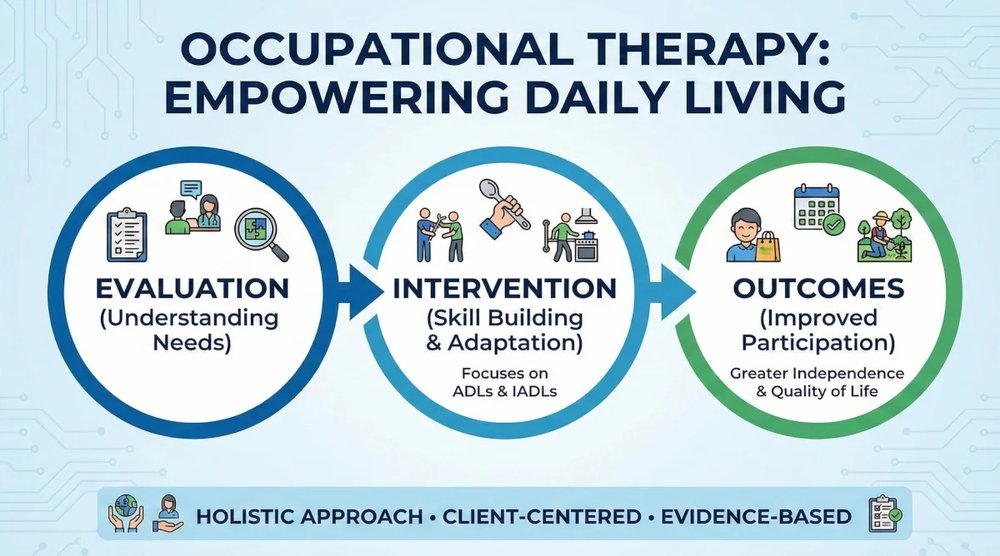 A typical adult Occupational Therapy session focuses on helping you
regain, improve, or maintain skills for daily living. Therapists assess
your current abilities and then work with you to overcome challenges,
aiming to boost your independence and quality of life.
A typical adult Occupational Therapy session focuses on helping you
regain, improve, or maintain skills for daily living. Therapists assess
your current abilities and then work with you to overcome challenges,
aiming to boost your independence and quality of life.
Your therapist will likely start by observing you perform tasks you find difficult. This might involve dressing, preparing a meal, or managing household chores.
They'll then discuss your personal goals and what you hope to achieve through therapy.
- Active participation is key. Therapists don't just tell you what to do; they guide you through exercises and strategies.
- The session is tailored. No two sessions are exactly alike, as they adapt to your progress and immediate needs.
Sessions typically last between 45 to 60 minutes. The number of sessions needed varies greatly depending on your condition and recovery speed. Some individuals might see significant improvement in a few weeks, while others with chronic conditions may benefit from ongoing support over months or even years. This regular engagement is critical for sustained progress.
Consider it a partnership. We work collaboratively to find solutions that fit your life and amplify your strengths.
The initial functional assessment and goal setting
Your first Occupational Therapy session marks the starting point of your personalised journey toward improved function and authentic living. This initial appointment centres on a thorough functional assessment to understand your unique challenges and strengths.
During this assessment, your occupational therapist will observe you performing everyday activities that you find difficult. This isn't a test; it’s a way to see how you currently manage tasks and identify the specific barriers you face.
This observation builds a clear picture of your baseline abilities. It helps us establish exactly where you are now, which is fundamental for charting the course ahead.
Following the assessment, the crucial step is collaborative goal setting. We’ll discuss your aspirations and what you want to achieve.
Your goals are the compass guiding our treatment plan, ensuring it’s always focused on what matters most to you.
We then translate these aspirations into specific, measurable, achievable, relevant, and time-bound (SMART) goals. These goals might range from regaining the strength to open a jar independently to managing fatigue to participate more fully in social activities.
The therapist uses the information gathered during the assessment to help shape these goals. They ensure they are realistic yet aspirational, aligning with your capabilities and desired outcomes. This partnership ensures the plan amplifies your strength and supports your authentic living journey.
Duration and frequency of therapy sessions
Session length and how often they happen depend on your specific needs. Typically, an Occupational Therapy session for adults lasts between 45 to 60 minutes.
This duration isn't fixed, though. We adjust it based on the complexity of your condition and the goals we're working towards. For acute recovery, a few weeks of more frequent, shorter sessions might be ideal.
For chronic or progressive conditions, the approach shifts. We focus on long-term strategies and may schedule less frequent sessions for ongoing support and adjustments. This ensures you maintain progress and adapt to changing needs over time.
Our aim is to create a schedule that is both effective and manageable, amplifying your talents for authentic living without overwhelming you.
Choosing a qualified occupational therapist for an adult
When selecting an adult occupational therapist, focus on their credentials and specialised training.
Look for therapists with AHPRA-Registeration. This signifies they have met rigorous educational and professional standards.
Beyond the basic AHPRA Registration, consider their specific areas of expertise. This is particularly important for adult OT services tailored to complex needs.
Specialised Certifications
Many OTs pursue advanced certifications to hone their skills in specific domains. These credentials indicate a deeper level of competency.
- Accredited Hand Therapist (AHT): Essential if the adult has experienced hand or upper extremity injuries, such as those from a stroke, accident, or repetitive strain.
- Driver-trained OTs: For individuals needing assessment and training to maintain or regain driving independence after an injury or illness.
When interviewing potential therapists, ask about their experience with adult OT services and how they approach common challenges. This helps ensure a good fit for your specific goals.The right therapist means better outcomes. Don't hesitate to ask about their certifications and experience with conditions similar to yours or your loved one's.
How to start your Occupational Therapy journey with VennCare
Starting your Occupational Therapy journey with VennCare is straightforward. We offer clear pathways designed to meet your specific needs.
Intake Pathways
VennCare provides distinct intake options to suit different circumstances:
- Standard Intake: For general inquiries and services.
- NDIS Pathway: Streamlined access for National Disability Insurance Scheme participants.
- 65+ Aged Care Pathway: Tailored support for seniors.
You can also book a Free Discovery Call to discuss your situation and goals before committing. This allows us to understand your requirements and explain how we can help.
Tailored Therapy Development
Once your intake is complete, our team develops meticulously tailored therapy sessions. We base these sessions on your unique profile and proven therapy modalities. This ensures your treatment plan is precisely aligned with your individual needs and aspirations for authentic living.
Our services are accessible across multiple locations in South West Sydney. We also provide multilingual support, with therapy sessions available in English, Cantonese, or Mandarin. This commitment to personalised care ensures you receive the most effective support possible.
Common misconceptions about adult Occupational Therapy
Many people assume Occupational Therapy (OT) is solely focused on physical rehabilitation or a necessary step after a workplace injury. This isn't the full picture. OT for adults is about restoring independence in everyday activities that matter most.
It’s a common misunderstanding to equate OT with physical therapy (PT). While both are vital, they tackle different aspects of recovery and well-being.
OT vs. PT: A Clear Distinction
| Feature | Occupational Therapy (OT) | Physical Therapy (PT) |
|---|---|---|
| Primary Focus | Restoring functional independence in daily tasks (ADLs). | Improving physical movement, strength, and mobility. |
| Typical Goals | Dressing, cooking, managing finances, returning to hobbies. | Walking, balance, reducing pain, increasing range of motion. |
| Activities | Adapting environments, teaching new strategies, using adaptive tools. | Exercises, stretching, manual therapy, gait training. |
| Who Benefits | Individuals with physical, cognitive, or emotional challenges affecting daily life. | Individuals recovering from injury, surgery, or managing chronic conditions affecting movement. |
This contrast highlights that OT looks at the whole person and their environment to achieve meaningful participation.
Another widespread myth is that OT is only for older adults or those with significant disabilities. This overlooks its broad application.
OT can be instrumental for adults managing a variety of conditions.
- Neurological conditions: Stroke, Multiple Sclerosis, Parkinson's disease, Traumatic Brain Injury.
- Mental health challenges: Anxiety, depression, trauma, schizophrenia.
- Chronic pain conditions: Fibromyalgia, arthritis.
- Cognitive impairments: Dementia, age-related memory loss.
- Post-surgical recovery: Beyond basic mobility, OT helps regain function for daily living.
- Driving safety: Specialised OT helps assess and improve driving skills.
(This shows the vast scope of OT beyond initial physical recovery.)
Our approach at VennCare recognises these varied needs. We develop therapy sessions tailored to your unique profile, addressing the specific daily challenges you face. This personalised strategy ensures your treatment plan is precisely aligned with your individual needs and aspirations for authentic living.
Our services are accessible across multiple locations in South West Sydney. We also provide multilingual support, with therapy sessions available in English, Cantonese, or Mandarin. This commitment to personalised care ensures you receive the most effective support possible.
Disclaimer: This blog post is for informational purposes only and does not constitute medical advice. Always consult with a qualified healthcare professional for personalised guidance.